
01 Feb ASI Did That: A Look Back Into 50 Years of ASI Achievements
Cowritten by Monique Tudon and Isabel Martinez
In the bicentennial summer of bell-bottoms and bold ambition, Cal State Fullerton saw the establishment of Associated Students Inc. in 1976 when the governing board gained fiscal independence, was established as a 501 (c) (3) non-profit organization and construction on the Titan Student Union began.
From the initial 300 students to over 45,000 students enrolled today, CSUF’s ASI is a recognized name across the California State University system, where student voices meet action through advocacy, events and resources all in the name of student success.
“That’s what truly makes ASI organizations in the CSU unique. It truly is learn-by-doing,” said Dave Edwards, ASI executive director. “Most student government organizations across the nation are simply clubs. Here at CSUF, our students are truly getting professional, real-world experiences that help them apply what they learned in the classroom. Nothing like this exists in the nation.”
Led by college students elected by their peers, ASI operates as a multimillion-dollar nonprofit corporation that has founded and launched programs and services with campuswide impact.
LGBTQ Community Finds Its First Home at ASI
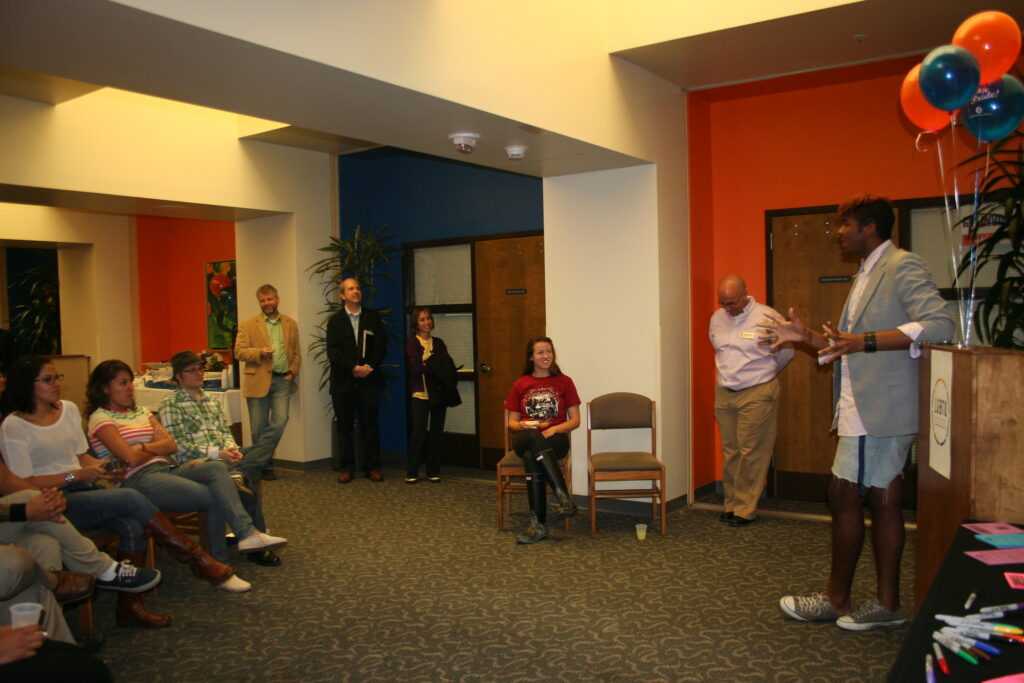
2012-2013 ASI President Dwayne Mason Jr. gives a speech to welcome people to the LGBTQ Resource Center. / Credit: ASI Marketing, Communications & Design
The Losquadro Keller LGBTQ Resource Center traces its roots to student advocacy and early organizing efforts within ASI. In 2012, the center was originally established under ASI as the LGBT/Queer Resource Center, providing support and community LGBTQ students and allies in a small office space in the Titan Student Union.
As student need grew, so did calls for greater visibility and space. In March 2016, campus advocates initiated a sit-in during an ASI Board of Directors meeting, calling for a larger, dedicated space and for their concerns to be formally acknowledged.
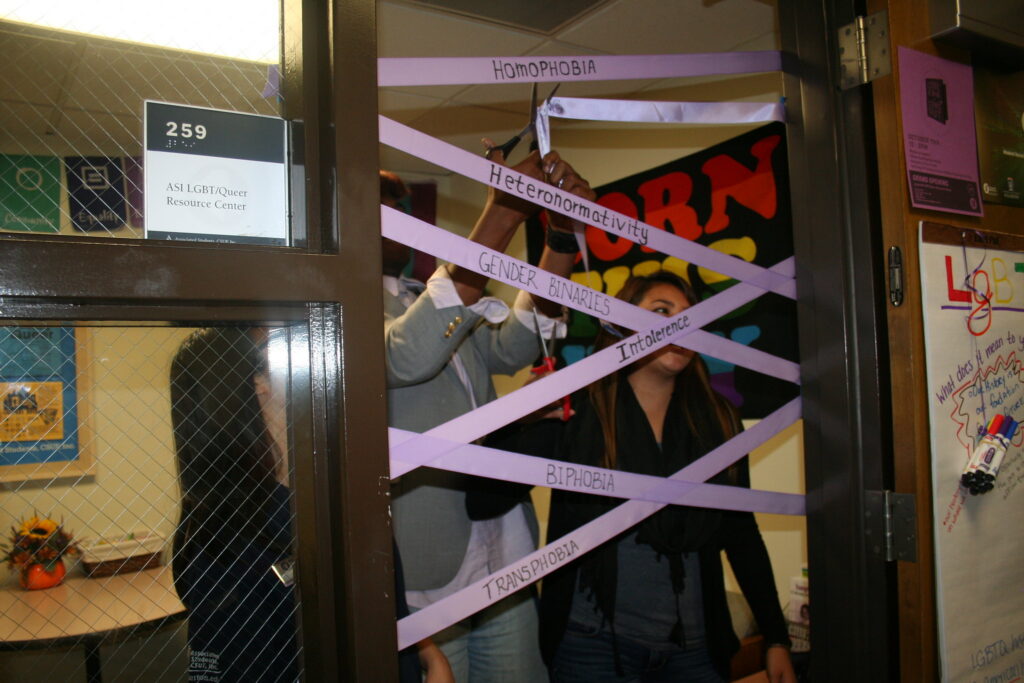
2012 ASI Student Leaders cut through different challenges the LGBTQ community face. / Credit: ASI marketing, Communications & Design
Students remained seated after the meeting adjourned, sharing experiences and outlining their needs. Even ASI’s board chair participated in the sit-in. The demonstration prompted Edwards to open a broader conversation between student advocates, leadership and campus partners. That same year, the ASI Board of Directors passed a resolution supporting LGBTQ student life, and the resource center transitioned from ASI to Diversity Initiative and Resource Centers, securing its status as a permanent, institutionalized campus resource. Susan Collins, director of ASI Corporate Affairs, who served as recording secretary for ASI at the time, recalled a moment that stood out during the movement. She described speaking with one student advocate who confided in her about struggling with housing insecurity.
“I kept telling them, ‘We’re here, you just have to say what you need,’” said Collins. The two then shared an embrace, and from that moment on, the student continued to seek Collins out, a connection she describes as deeply impactful.
Scholarships and Research Grants Offer Practical Help for Students
View this post on Instagram
ASI is more than just fun concerts, celebrity guests and free art workshops; it also provides essential, practical support for students. Each semester, ASI awards over 130 scholarships and research grants to help students manage living costs and advance research in their fields.
“ASI is here to serve, to advocate for and to support student success. ASI is the student body,” said Collins.
View this post on Instagram
With over $300,000 in scholarships projected this year and $25,000 worth of $2,500 individual research grants, students can qualify based on merit, experiences as a student parent, formerly incarnated and so much more.
“While it’s a lesser-known resource, I truly feel like it’s one of the most impactful. We have so much money going to students and now, thanks to the ASI Student Wellness Initiative, the available funds have more than doubled,” said Collins.
The ASWI, which passed in spring 2024, provides additional funding for scholarships and research, easing financial burdens for students of all backgrounds.
ASI ‘Steps Up’ to Reduce Food Insecurity on Campus
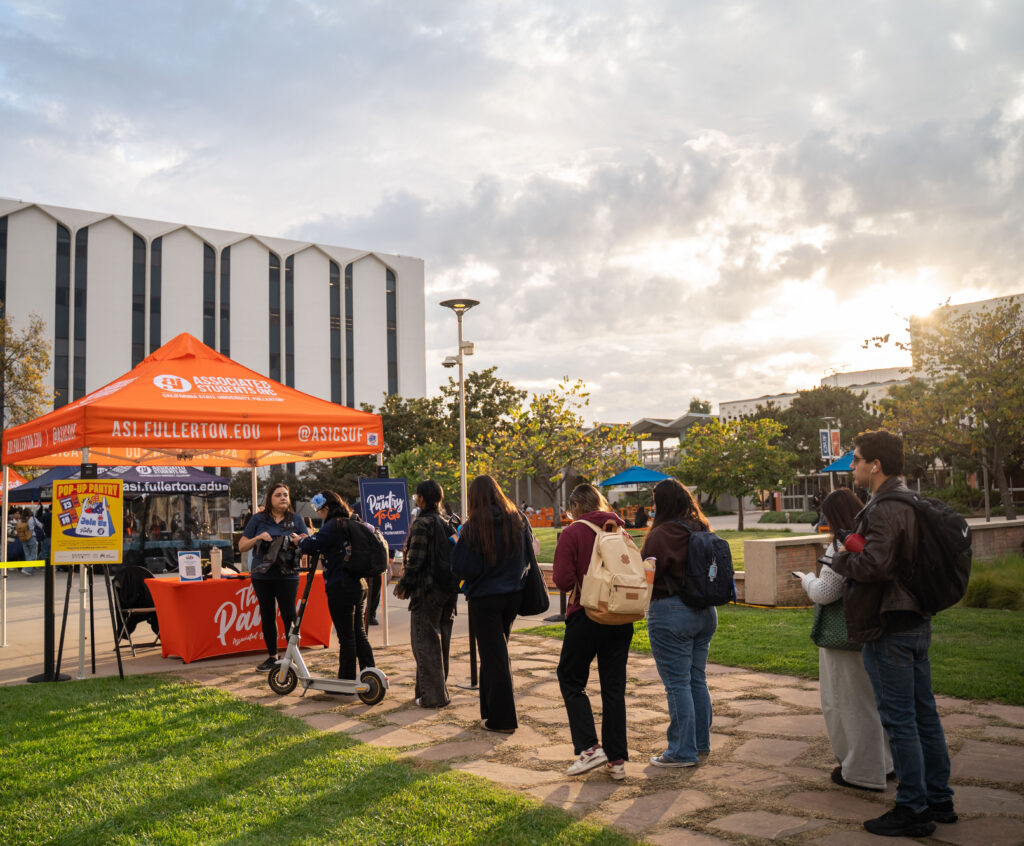
ASI Pop-Up Pantry regularly show up on campus to reach students of all demographics. / Credit: ASI Marketing, Communications and Design
A study by the National Library of Medicine reported that more than 40 percent of college students struggle with food insecurity, over 6.3 million nationwide. At CSUF, the ASI Food Pantry tackles this issue head-on, and it all started with an initiative spearheaded by student leaders. What started as a mobile food pantry soon turned into regular pop-up pantry events on campus.
Thanks to a resolution passed by student leaders in 2020, the proposal for a permanent space for a food pantry was taken to campus leaders and eventually approved.
Cristina Truong, former student and ASI associate director of TSU Programs and Food Pantry, saw this process from idea to conception.
“We always like to say that ASI stepped up, because that’s really what happened,” said Truong. “There had been talks about a permanent pantry on campus, but ASI student leaders advocated to finally make a designated space.”
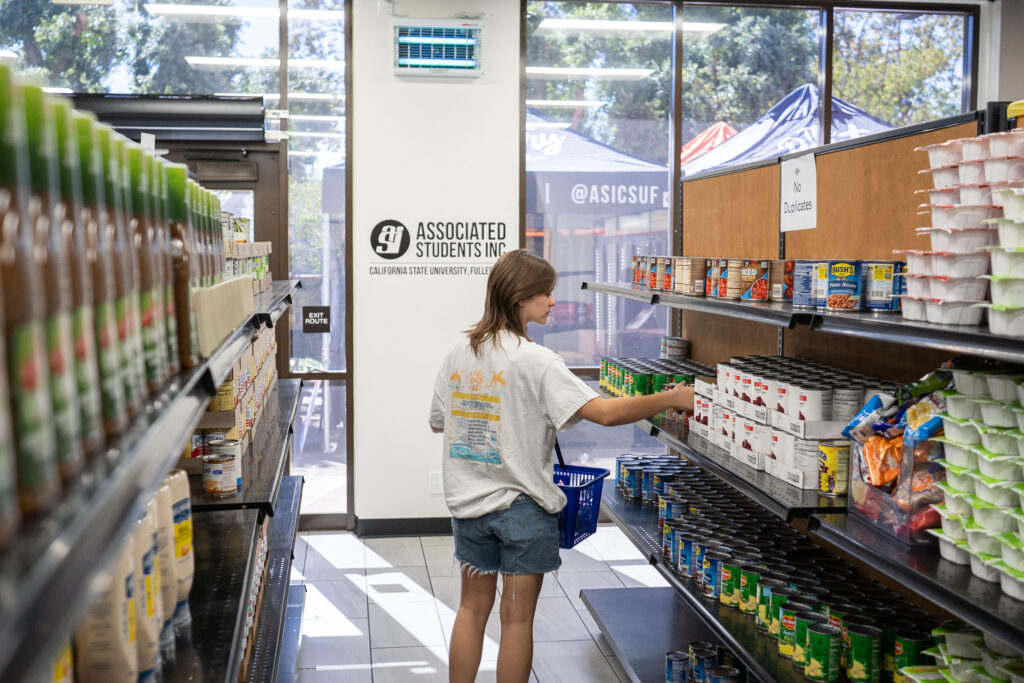
Students can shop for a number of items at the pantry once a week. / ASI Marketing, Communications & Design.
Since opening in 2021, The Pantry has continued to expand its resources. Through partnerships with Bimbo Bakeries, Shin Ramen, Bento Sushi, Bracken’s Kitchen, and Second Harvest Food Bank, it provides fresh produce and cultural foods to a diverse student body.
“Whether it’s ‘I can’t make it through the week’ or ‘I don’t get paid until Friday,’ students have a resource here on campus,” said Truong. “They know there’s a dependable resource they can come every single week and get food.”
Today, The Pantry distributes about 6,000 pounds of food each week to 800–1,000 students and offers additional resources such as co-hosting cooking classes with TitanWELL, finals-week snack bags, holiday boxes and refrigerated lockers.
Through sustainable partnerships, The Pantry also rescues unused food from Stater Bros. Markets, Ralphs, Sprouts Farmers Market, Northgate Market, and 99 Ranch Market, and receives fresh seasonal produce from the Arboretum and Botanical Garden at Cal State Fullerton, where perishable waste from The Pantry is also composted.
Looking ahead, ASWI will centralize all basic needs on campus, including The Pantry, making it even easier for students to access essential resources.
“No student should have to worry about where their next meal will come from,” said Truong. “It’s one less thing for them to worry about.”
Community at Large: Camp Titan, Titan Youth Summer Camp and Titan Outdoors
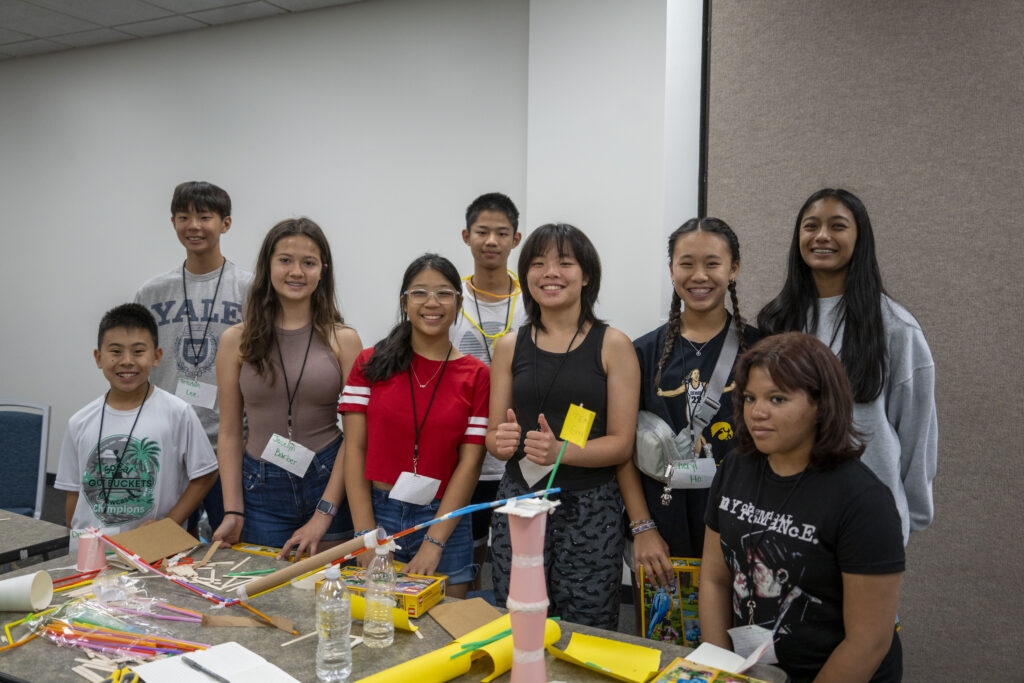
Camp Titan engages children aged 11-14 through STEM projects, Disneyland Imagination Campus and more. / Credit: ASI Marketing, Communications and Design
ASI emphasizes community engagement, with impact that extends beyond campus into the local area.
Through programs like Camp Titan, Titan Youth Summer Camp and Titan Outdoors, ASI offers enriching experiences that extend learning beyond the classroom for both students and community members.
Camp Titan, a 53-year-old program run by ASI’s Student Programs and Engagement department, serves local and underprivileged youth ages 11–14 by offering leadership development, STEM projects, and now a few days of Disney Imagination Campus at Disneyland.
Titan Youth Summer Camp serves local children ages 7–10, providing recreational activities such as rock climbing, swimming, sports and more.
“These programs allow ASI to branch out to families and parts of the community that may feel being on campus isn’t an option,” said Austin Ysais, ASI assistant director of Student Programs and Engagement.
“We do a lot of self-reflection and self-development for the campers, where they’re able to really understand that college is a possibility for them.”
Similarly, Titan Outdoors is a program that started in 2017 offering outdoor trips, equipment and education to the CSUF community at an affordable cost.
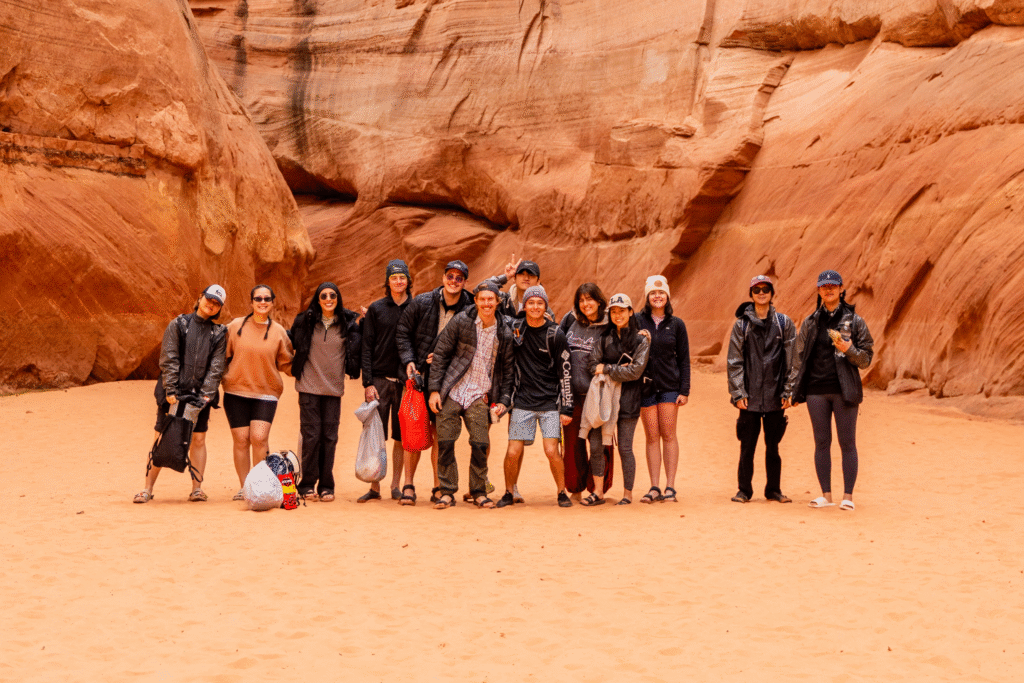
Titan Outdoor trip leaders and campus students pose for a picture on their annual Grand Canyon trip. / Credit: ASI Marketing, Communications and Design
“We’ve cultivated a welcoming culture that invites everyone to participate, whether they’re challenging themselves to climb a route at our incredible rock wall, renting gear from our rental center to embark on their own adventure, or signing up for one of our exciting, guided trips,” said Angel Ramos, ASI Outdoors Adventure coordinator.
Offering trips that usually cost hundreds of dollars in transportation, equipment and reservations, Titan Outdoors helps students can find peace in nature, even in the middle of a bustling Orange County city at a much affordable price.
Ramos recounted a moment where a student initially felt unfamiliar with the outdoors, but left feeling welcomed, challenged and connected.
“Stories like this remind us of the impact we can have by creating supportive and inclusive spaces for students to explore the outdoors,” Ramos said.
Children’s Center Comes Full Circle
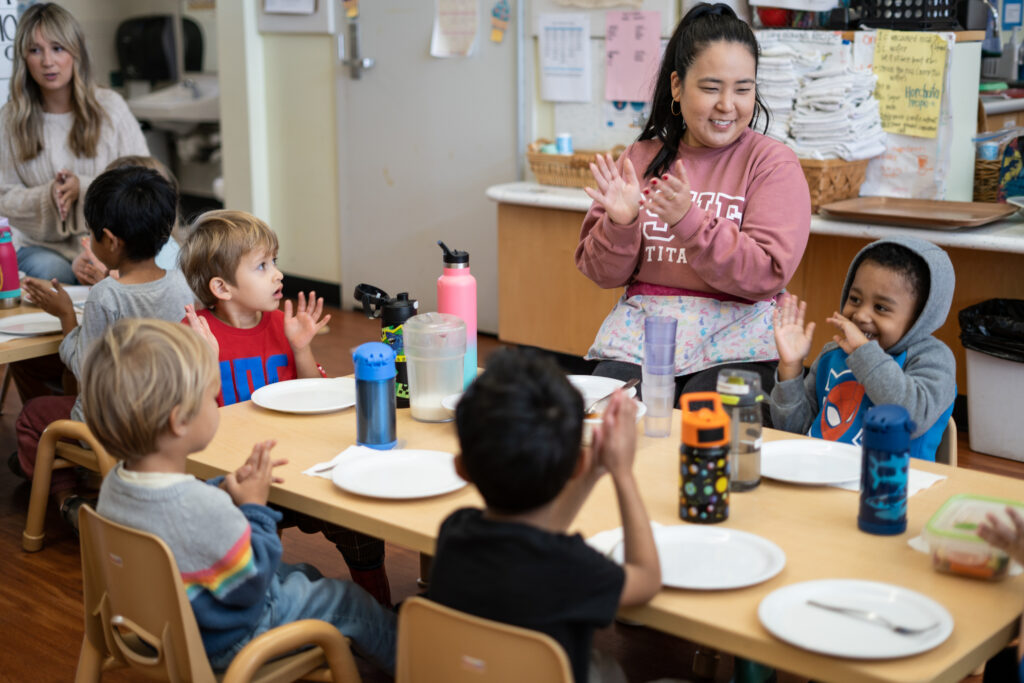
Children Center teachers obtain credentials and plan regular engaging curriculum for its children. / Credit: ASI Marketing, Communications and Design
While ASI’s mission is student-led, its impact reaches even the tiniest Titans. In 1971, a group of CSUF student-parents sought higher education without sacrificing their parental responsibilities, leading to the opening of the Children’s Center in 1972 at a small local church.
In 1976, ASI helped relocate the center to campus and establish a dedicated full-time staff, and in 1996, students passed a referendum to create a permanent on-campus childcare center.
“When I first saw the finished facility, it was so breathtaking to see the nature surrounding the area, the classrooms with child-sized furniture. It felt like it was such a respectful environment for children,” said Lydia Palacios, ASI Children’s Center director.
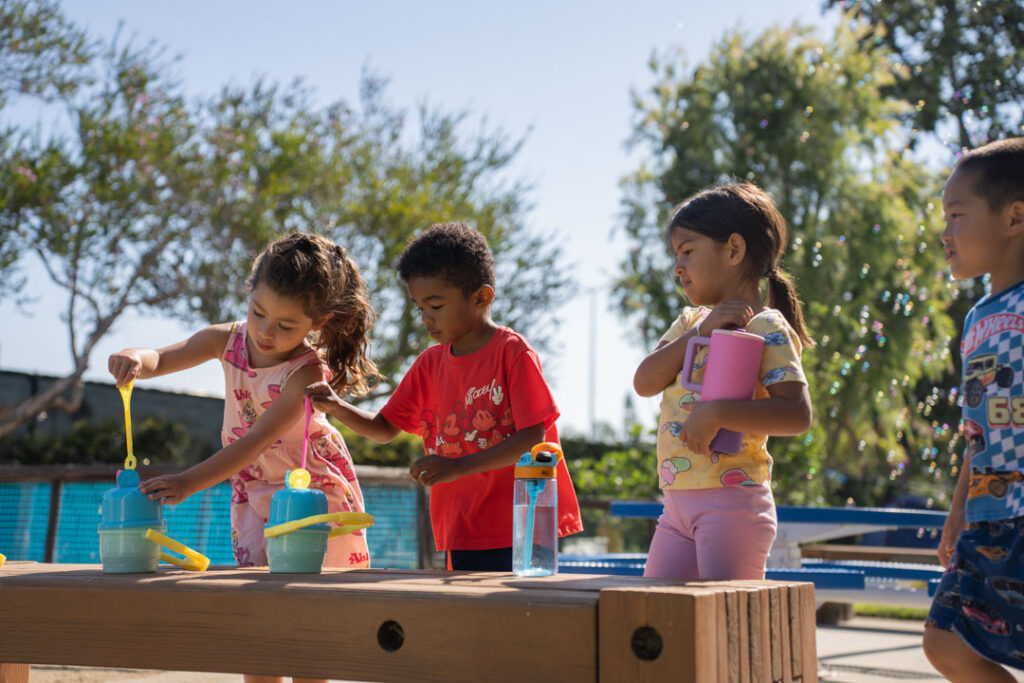
The Center’s amenities include an outdoor playground, regular visits to the Arboretum and motor skills toys. / Credit: ASI Marketing, Communications and Design
The current Children’s Center, located on the northwest side of campus, opened its doors in 2011. The new space was designed fully equipped with outdoor play areas, classrooms and a full kitchen to provide the kids with meals and snacks. Contrary to a common misconception, the Center is more than a daycare; it employs accredited teachers who develop engaging curricula alongside intern teaching assistants.
Palacios has noticed a recurring trend where Center alumni grow up, attend CSUF and send their own children to the Center, a full circle moment.
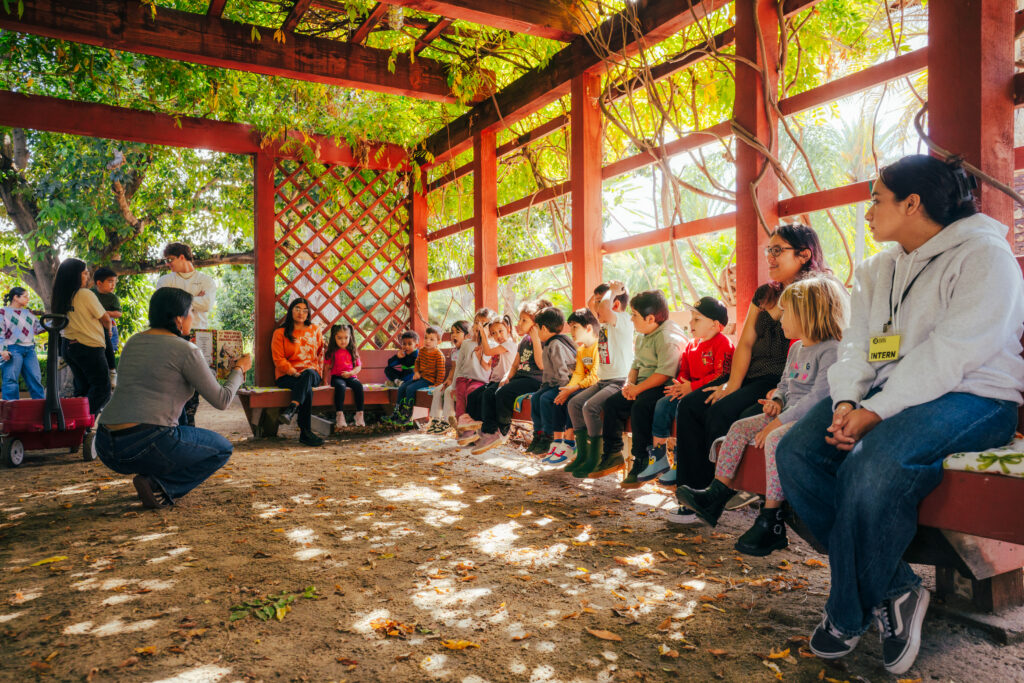
The Center children enjoy regular visits to the Fullerton Arboretum and storytime by Arboretum student interns. / Credit: ASI Marketing, Communications and Design
“Families see the program as a safe, welcoming space where children feel comfortable, secure, and like an extension of family,” said Palacios. “Many parents and grandparents recommend it based on the positive impact it’s had on their own families. That trust comes from strong relationships and long-standing, dedicated staff who make families feel confident leaving their children in our care.”
Today, the Children’s Center is accredited by the National Association for the Education of Young Children and serves over 75 CSUF families with children ages 3 months to 5 years old.
The Soundtrack of CSUF

CSUF students enjoy music at the 2025 ASI Spring Concert. / Credit: ASI Marketing, Communications and Design
From Disneyland to the north of campus, to the bustling scene of music in Downtown Fullerton, the spirit of entertainment is alive and well at CSUF.
Anyone stepping onto campus is likely to hear music in many forms, from Titan Radio on the speakers to students rehearsing or ASI’s live performances throughout the year.
Live music and entertainment have been central to ASI programming since its founding in 1976. Ysais, whose work as director of Student Programs and Engagement brings live entertainment to campus, said music is part of the university’s DNA, with early students gathering in the Titan Gym for performances by artists like Oingo Boingo.
“There’s a real rich culture around live performances and entertainment in the city that we live in,” said Ysais “If you go onto the sixth floor of the State College parking lot, you can see the Matterhorn. That’s how close we are to one of the meccas of family entertainment. I think because we’re so close to that, it’s natural for us to do these concerts and performances amongst the academics of campus.”
Over the years, CSUF has hosted artists of all levels. Smaller acts perform in Concerts at the Becker, a series that gives emerging artists live performance experience. While they may be lesser known at the time, students never know who might take the stage before their big break, like No Doubt, Tiffany Day and Rage Against the Machine.
In 2007, ASI took inspiration from the 2004 Vans Warped Tour that visited campus, and on April 27, 2007, the inaugural ASI Spring Concert was held at Titan Stadium where Shiny Toy Guns were the headliners.
Today, live music is still cornerstone in ASI’s program with different concerts and performances throughout the semester, bringing in artists like Miguel, Metro Boomin, Dominic Fike, LMFAO and so much more.
Connection in Isolation: ASI During COVID-19
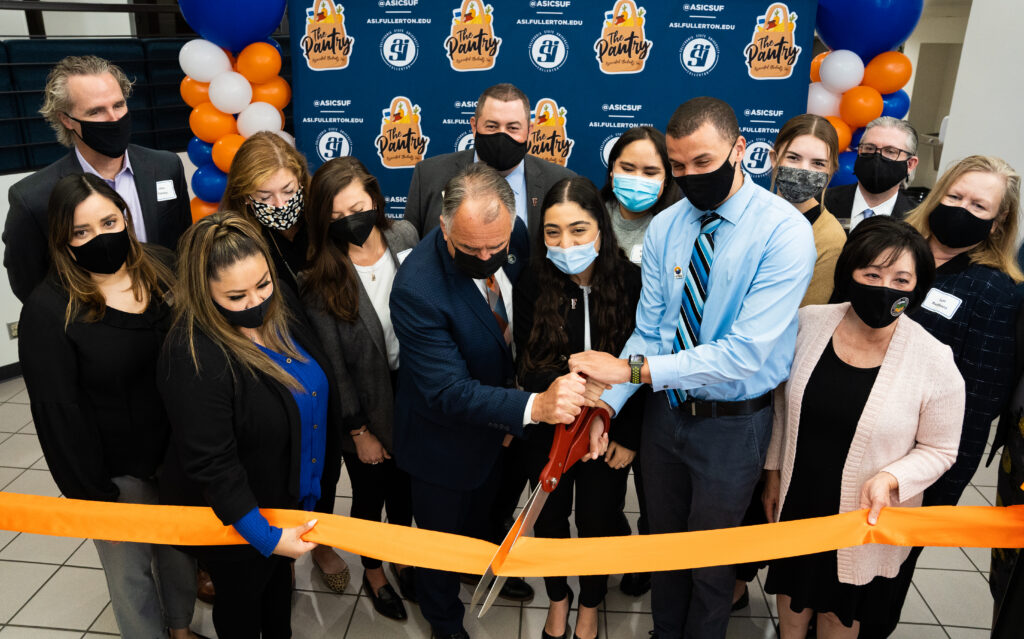
ASI staff and campus leaders at the opening of the permanent food pantry in the TSU. / Credit: ASI Marketing, Communications and Design
In March 2020, the world came to a standstill following global announcements of the COVID-19 virus. Businesses shut down, public spaces closed, and students were told to stay home and self-isolate.
ASI at CSUF remained operational, finding creative ways to continue supporting students remotely.
Through virtual events, online activities for children in the local community and building maintenance, ASI remained as busy as ever.
During this time, student government leaders continued to meet virtually and made major strides for campus, including passing resolutions to increase funding for undocumented and international students and advancing plans for a permanent food pantry. The Children’s Center also remained active, offering virtual resources to all children regardless of enrollment status.
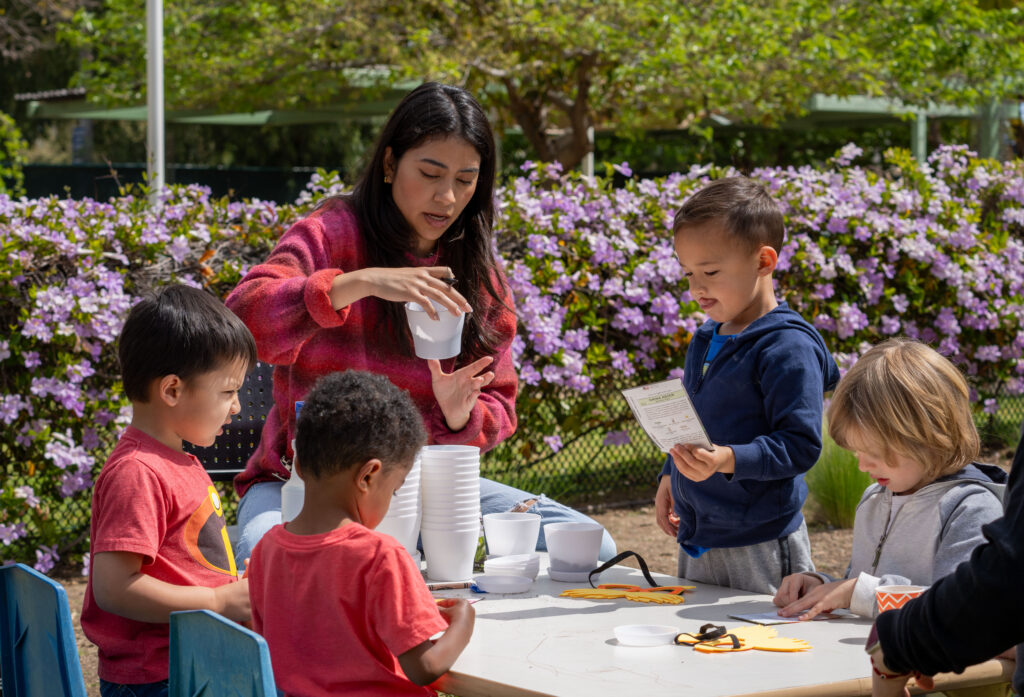
Regardless of the pandemic, Children Center staff continued to provide virtual resources and events for the local community. / Credit: ASI Marketeing, Communications and Design
Meanwhile, a virtual Spring Concert and Beyond the Conversation installments still took place, bringing in celebrities like Yara Shahidi, Louise the Child, Dominic Fike with Bretman Rock and Suburb Talks as emcees.
At virtual programming events, student participants were sent gift cards for meals, a simple way to ensure students felt connected and cared for despite the isolation.
“Looking back, it was quite an accomplishment that we were able to continue to serve students during this difficult time,” said Mike Greenlee, ASI’s design manager in the office of Marketing, Communications, and Design. “For what we do in the service of students, so much of our physical space is for students to have a place to go, study and eat. Regardless, ASI was able to accomplish a lot.”
The Titan Student Union, aka The Campus Living Room
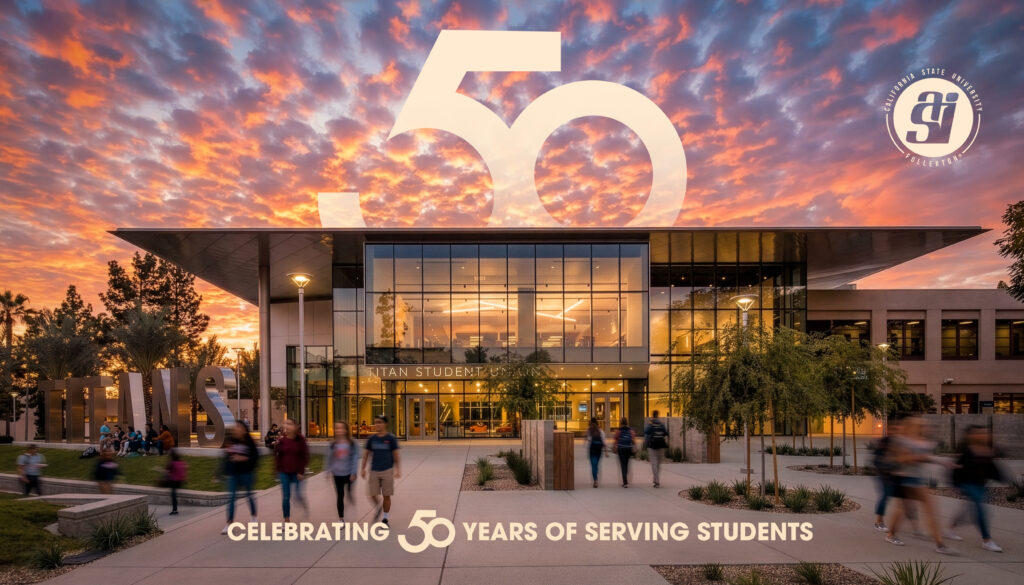
On January 27, 2026, ASI celebrated 50 years of commitment to student service, dedication and success. / Credit: ASI Marketing, Communications and Design
Since its first introduction as the University Center in 1976, the Titan Student Union has seen generations of Titans walk through its doors in search of their home away from home.
“For some people, they come to school, take their classes and then go home, but a lot of people in university are looking to find themselves for the first time,” said Kirsten Stava, TSU director. “We’re giving students this safe space where they can come to explore their hobbies and interests on their own time without needing to join a club.”
You might be familiar with some of the TSU’s staples: The Pantry, Titan Bowl and Billiards, ESports Lounge, even the University Conference Center, but between the nooks and crannies, you can see the transformations the TSU has been through over the years.
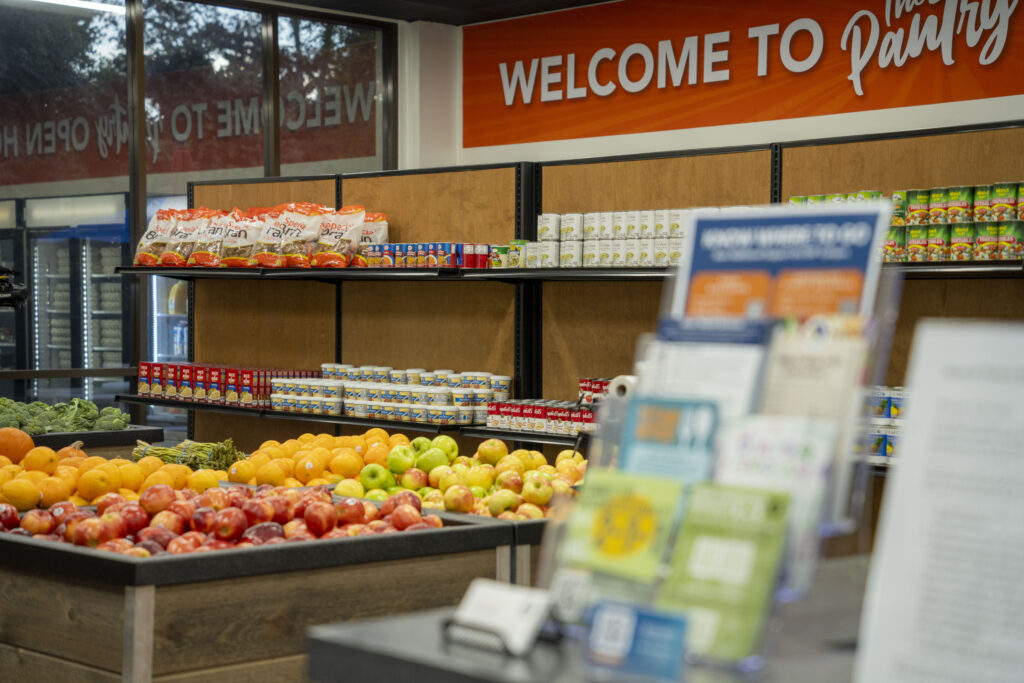
The TSU is home to a permanent food pantry stocked with fresh produce, reheatables, snacks, drinks, and refrigerated lockers. / Credit: ASI Marketing, Communications and Design
“The TSU isn’t just a space where student government meets. It’s a student-centered space built around what students want to see and use,” said Mike Lara, ASI Events and Programs manager. “Beyond events, we offer a wide range of programs and services designed to support different interests and needs.”
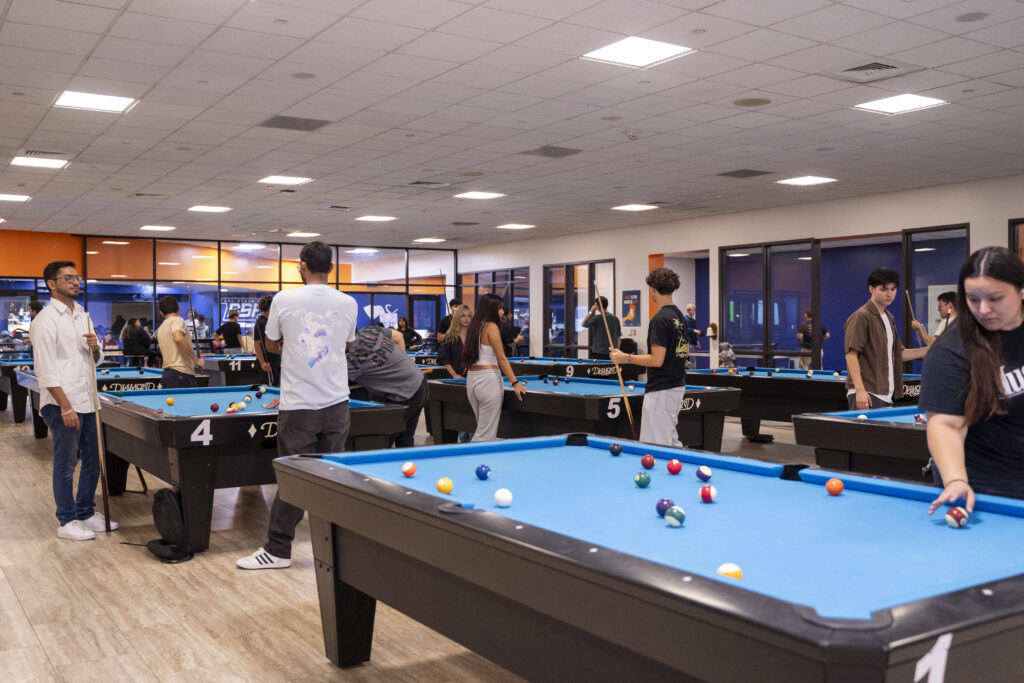
Titan Bowl and Billiards provides students a way to have fun, make friends and attend community events. / Credit: ASI Marketing, Communications and Design
The building has gone through different expansions and renovations in the 50 years since it opened. While a staple now, the Portola Pavilion wasn’t added until 1996. Twenty years later, the glass southside of TSU would be added, making the building what we know today.
Unfortunately, with all hellos come some goodbyes, and the TSU has said goodbye to different services and events over the years. ASI professional staff spoke fondly of the Garden Cafe, an ice cream parlor, a music listening room, a computer lounge, a hair salon and a travel agency that once graced the halls of the TSU.
Almost 50 years later, the TSU’s main goal of supporting student needs hasn’t changed. Whether looking for a place to nap, grab a bite to eat or explore their interests, the TSU is waiting for them.
For the Students, By the Students
ASI’s long-standing, unofficial motto – For the Students, By the Students – is reflected in its history at CSUF, where elected student leaders have played a central role in advancing campus initiatives and changes.
From advocating for new academic programs to addressing food insecurity, mental health pressures, career readiness and broader community needs, this work produces tangible outcomes. One of the most recent developments, the ASWI, will totally revamp campus amenities with a focus on wellness.
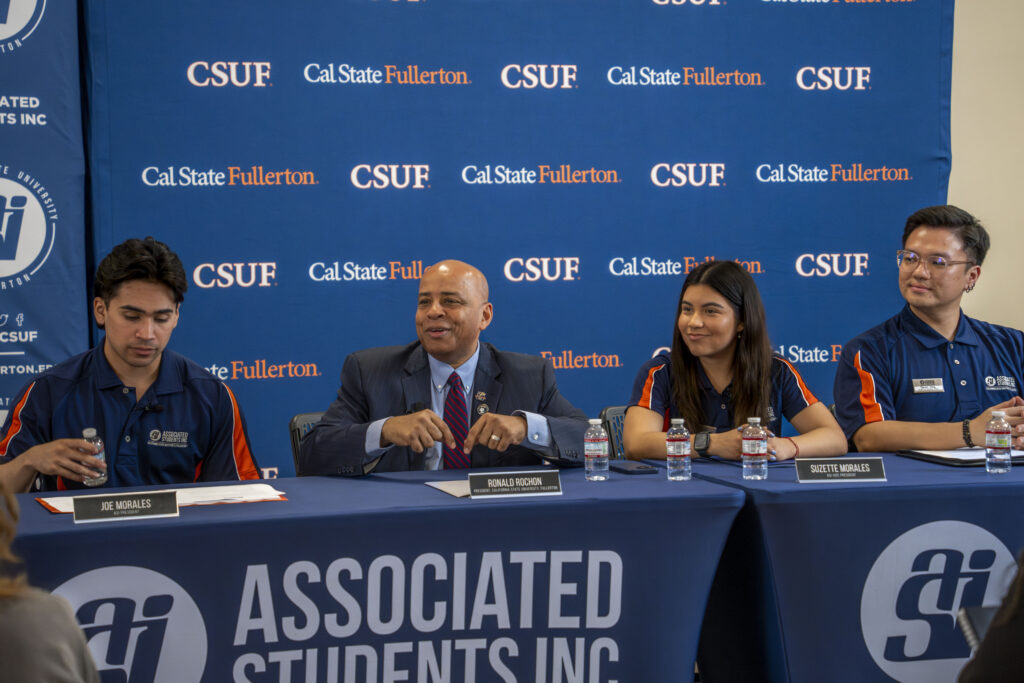
ASI President, Vice President and Board of Directors chair alongside ASI campus President at the ASWI press conference, where it was officially passed. / Credit: ASI Marketing, Communications and Design
Former student leader and current ASI Student Government coordinator, Ashley Zazueta, recalled the work it required to pass the initiative, and how the process made her grow.
“I realized I was making a difference during our wellness presentations, where students openly shared their concerns,” said Zazueta. “We directly incorporated their feedback, shaping an initiative driven entirely by student needs. So many students supported the initiative because they saw themselves in it. It was clear we were addressing real issues that mattered.”
In the past, student leaders have led events and initiatives involving legal help for immigrants, toy drives, U.S election education and outreach, political workshops, basic needs advocacy and more.
“ASI student leaders have the rare opportunity and responsibility to represent the entirety of a 45,000-student body,” said Rebecca Hesgard, ASI Student Government director. “Just over 50 students in ASI leadership help advocate for the student perspective to be embedded across each decision-making body on campus. As culture, ideas and society shift, students are the voice that guides an institution forward to be its best.”
That responsibility was further reinforced when Edwards became executive director, ushering in an era of deeper student involvement in campus governance.
“He put emphasis on students having shared governance,” said Collins. “As a result, students were able to sit at the table, have conversations with the university president and vice presidents, meeting with them on a regular basis. He made sure students related to campus leadership, so that there was dialogue.”
Your Fees at Work
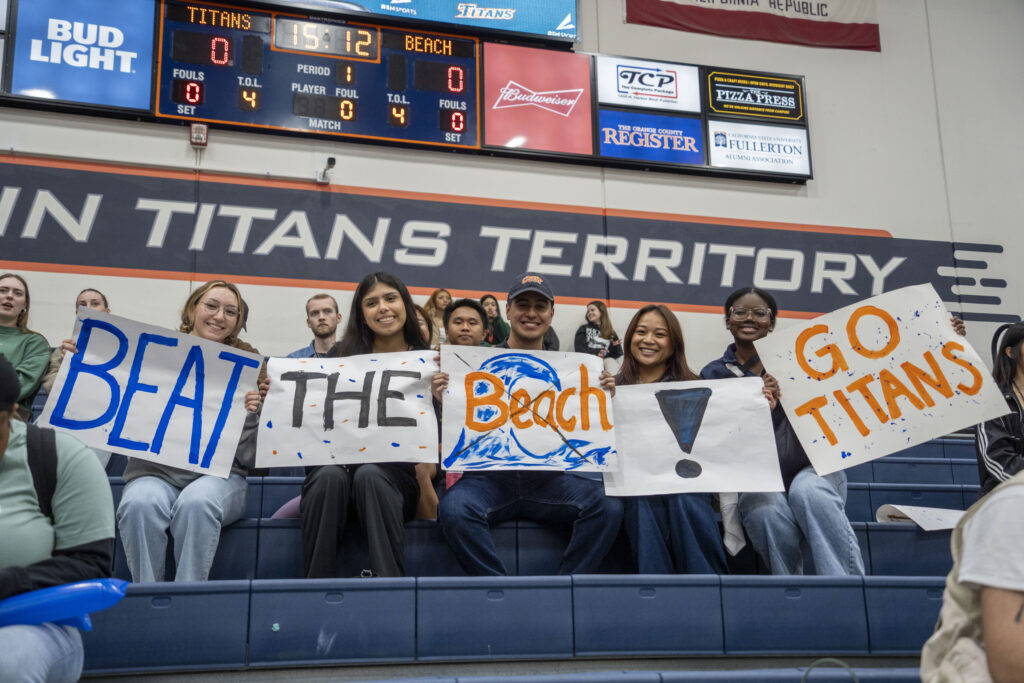
ASI makes it possible for CSUF students to attend all sports home games for free, providing tailgates and sign-making events. / Credit: ASI Marketing, Communications and Design
Money is funny, but that doesn’t mean ASI doesn’t make sure student fees are funneled intentionally back into the student experience.
ASI’s longtime relationship with CSUF Athletics dates back to 1993, in which ASI directly funds scholarships, room and board, tuition and travel for student-athletes and coaches. Through this partnership, all CSUF students can attend CSUF home sports games completely for free, establishing Titan pride and community.
Fun fact: You can find ASI in CSUF’s Titan Athletics Hall of Fame for this very reason.
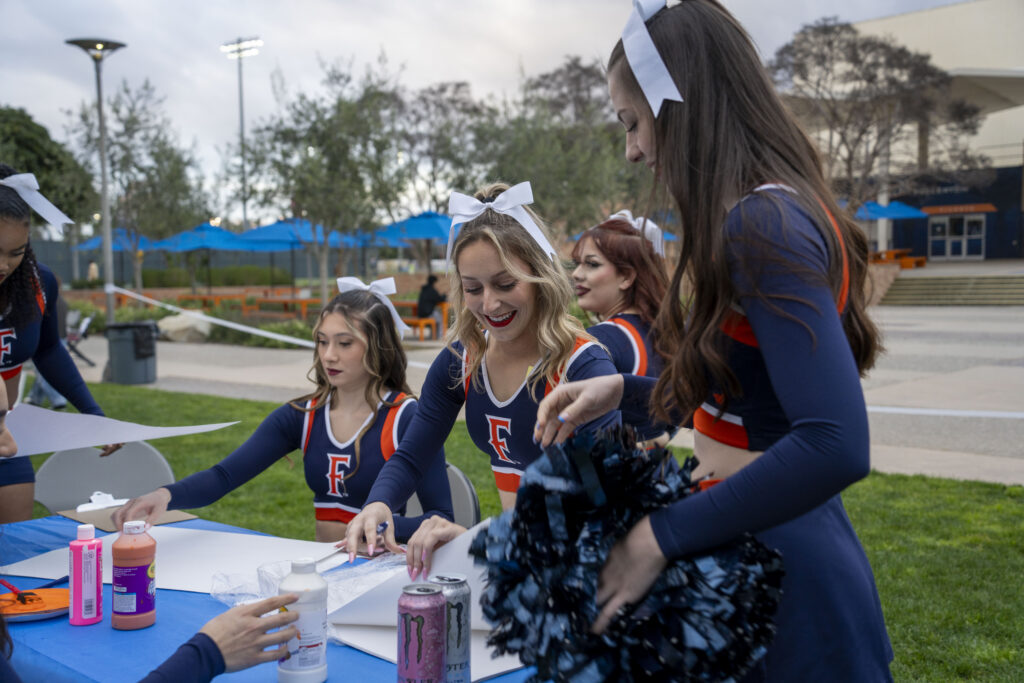
Titan Athletic cheerleaders attend ASI tailgates to hype up campus spirit and help with sign-making. / Credit: ASI Marketing, Communications and Design
ASI also funds all recognized Academic Interclub Councils (ICC) travel and events, student workers at the Arboretum, ASI programming, scholarships, student government stipends and more to ensure students are supported.
“As a non-profit auxiliary on campus, transparency is especially important for us, because students don’t always know where their fees are going,” said Deserita Ohtomo, ASI budget coordinator. “By being more transparent about where their money is going, students can better support and take part in the innovations taking place at ASI.”
For the Titan community wanting to delve deeper into where all student fees go, the annual ASI budget is available online for viewing.
Basic Needs Start at ASI

Campus and ASI leaders all took part in the opening of a permanent Basic Needs Center on campus. / Credit: CSUF News
In 2015, the lack of basic needs on campus began raising concerns among students, particularly within ASI.
Through the persistence of a kinesiology student, ASI student leader Kayleigh Bates helped spark meaningful change that would impact generations of CSUF students.
What began as an effort by master of social work students facing roadblocks was brought to the Health and Human Development ICC, where Bates served as acting president. After learning that other CSU campuses already offered basic needs services, Bates made a crucial move; she listened.
“I acknowledged that I didn’t have the answers, but that I could get them. I went to meeting after meeting, asked questions, and continued to bring up the topic of basic needs,” said Bates. “It was just being intentional with those conversations and asking ourselves, ‘why haven’t we?’ and ‘how can we?’”
What started as conversations soon turned into an established committee, surveys and cross-referencing previous campus research. Finally, Bates was able to write multiple referendums on housing and food insecurity that would be presented and approved by the university president.
“My drive came from a simple belief: if students are homeless or aren’t eating, how can we expect them to succeed academically? At a time when the university was focused on improving graduation rates, it was clear that food, housing and stress were real barriers. Addressing this felt like a practical, overdue solution that should have already been in place.”
View this post on Instagram
But the conversations didn’t stop on campus. Bates also participated in the California State Student Association, connecting with representatives from other CSU campuses to discuss how their basic needs initiatives began, speak with directors, and build bridges between ASI teams.
“It was me trying to continue to say, ‘Yeah, this is important to us.’ And how else can I connect the dots for people to know how important it is to have basic needs,” she said.
Bate’s referendums and the collaborative work of many others led to the Basic Needs Services today, demonstrating that with the courage to ask questions in any space, meaningful change is possible.
Mentorship That Makes a Difference
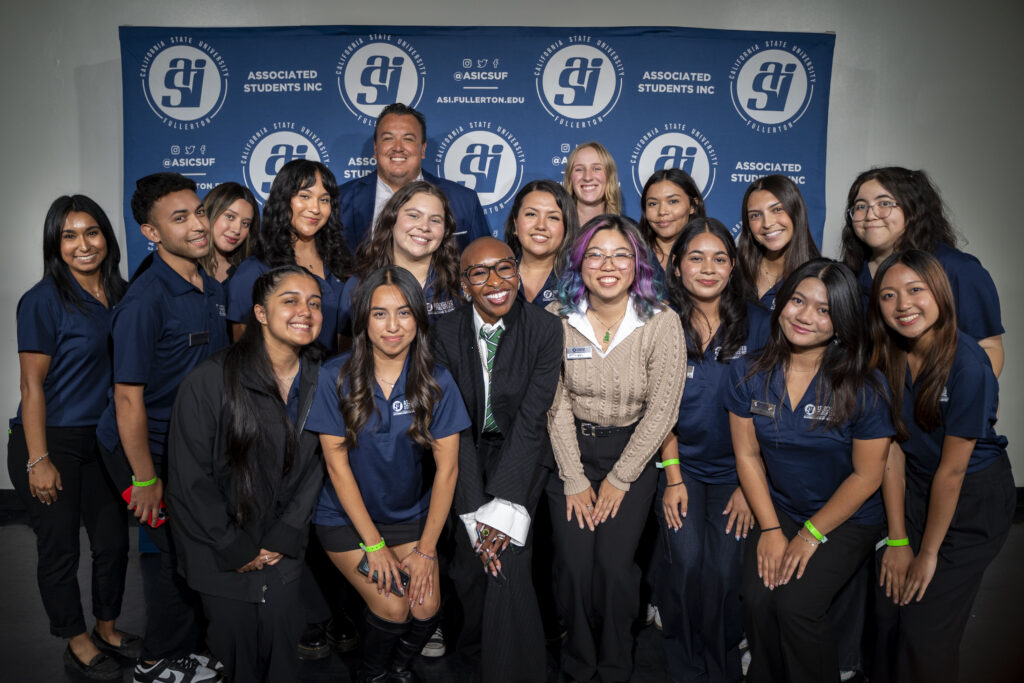
Programming students help plan and execute Beyond the Conversation events, bringing in celebrity guests like Cynthia Erivo, Jon M.Chu, Giancarlo Esposito and more. / Credit: ASI Marketing, Communications and Design
As the biggest employer on campus employing over 400 students, the relationship between professional and student staff is thriving in the TSU, Children’s Center and SRC.
Many professional staff members see the impact of their work firsthand as they mentor students over the years. They often share the same story: shy, intimidated freshmen arrive searching for identity and leave confident and ready for the next chapter of life.
“If you spend one ounce of one minute talking to one student and letting them know you care about them, you’re making a difference,” said Collins. “When you help students do work so that they can help other students, you’re making a difference.”
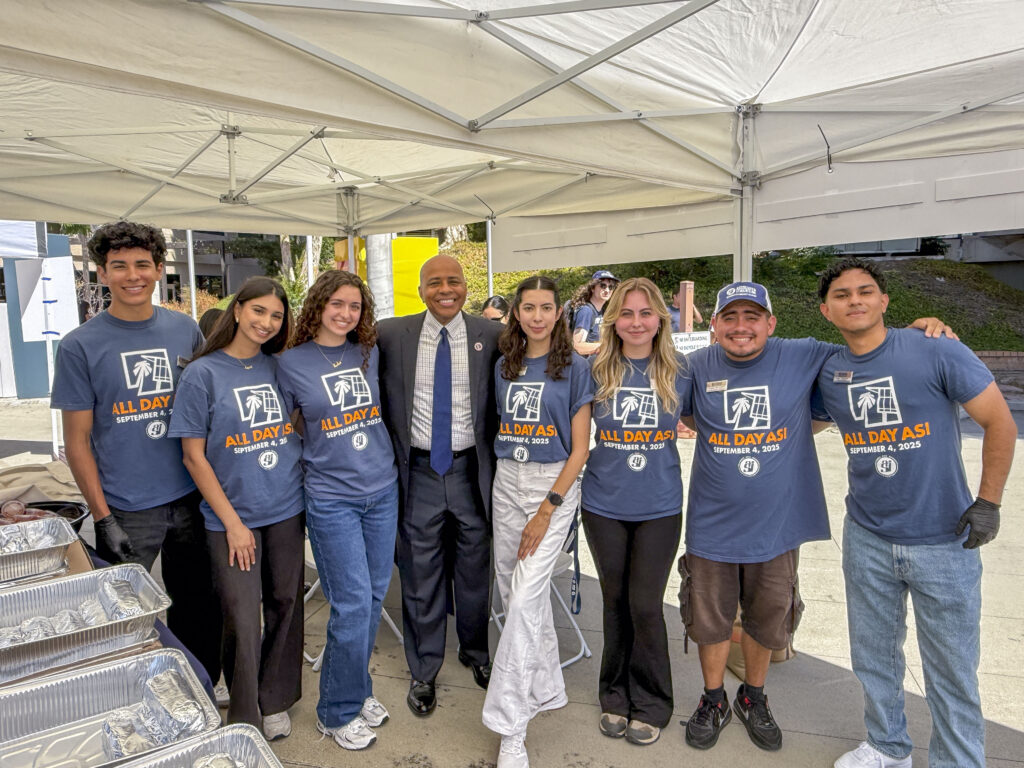
ASI student leaders and ASI President Ron Rochon at All Day ASI. / Credit: ASI Marketing, Communications and Design
The work done at ASI is nothing short of transformative and applicable to real world skills.
“A student shared that it was during her experience on my student team that she felt she had gained real-life job experience and better understood what she wanted to do in her future now,” said Megan Duffy, ASI special projects coordinator.
For others, their time as student leaders directly impacted their future careers.
“I developed public-speaking, networking, time-management, leadership, and management skills,” said Zazueta. “I also gained my first exposure to the idea of pursuing advanced degrees in education. Before student government, I had never considered graduate school or another degree.”
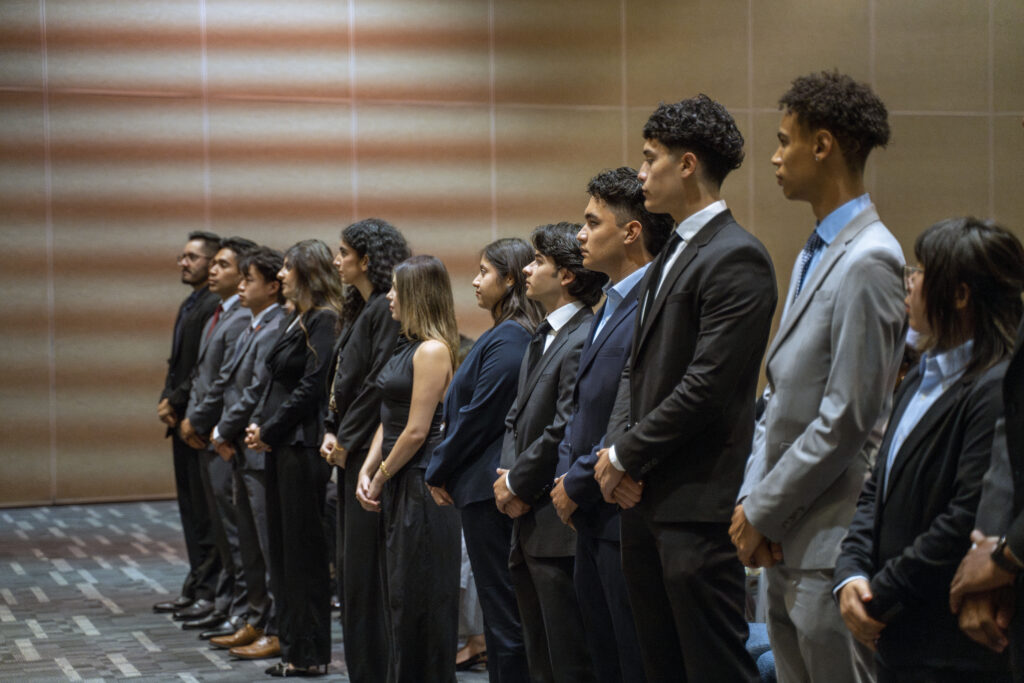
ASI student leaders are sworn in at the beginning of each school year, dedicating their year to student success and advocacy. / Credit: ASI Marketing, Communications and Design
With 50 years behind it, ASI’s future rests in the hands of the students, staff and community members committed to creating the best possible path for generations to come.
“Our role as a collective is to create opportunities and provide the support needed to uplift, guide, and mentor every CSUF student,” said Greenlee. “ASI students are leading a multi-million-dollar nonprofit organization, defined not just by what we do, but by what we stand for every single day.”
Here’s to the next 50.