
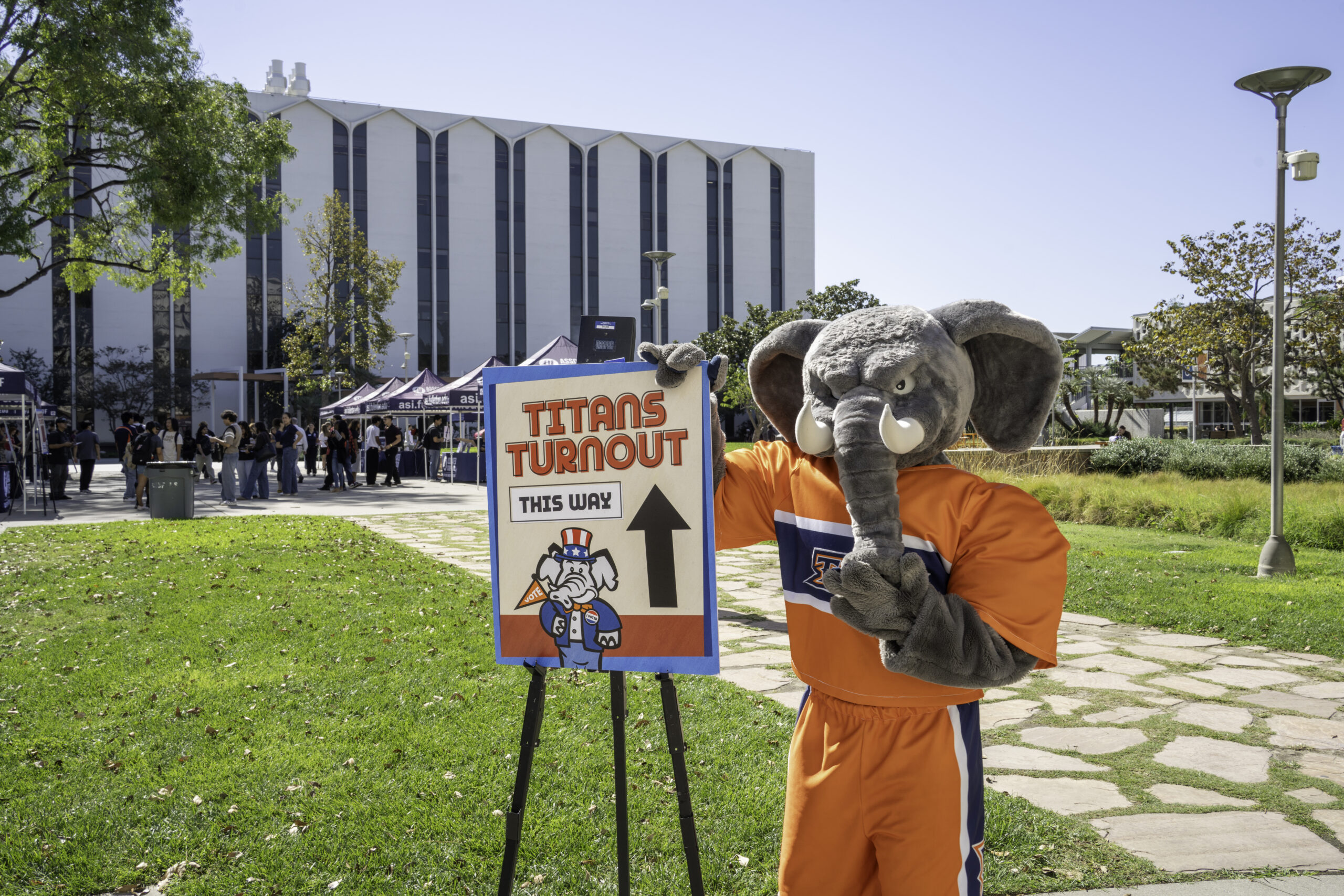
29 Oct CSUF and ASI Encourage Student Voting Ahead of 2026 Midterms (Voter Guide Included)
By Karla Garcia
Nearly 250 million Americans are eligible to vote in the Nov. 3 election, when voters will have the opportunity to choose their representatives and weigh in on measures that affect their communities. With 14 propositions and 10 state offices on the California ballot, the November midterm election has the power to change the political landscape of the United States.
Traditionally, college-aged populations have had low voter turnout rates, and according to Princeton’s School of Public and International Affairs, are less likely to participate in politics as 18-24-year-olds are outvoted by 45-64-year-olds.
Yet more recently, students have demonstrated an increasing interest in politics and civic engagement. During the 2024 presidential election, 76% of college students registered to vote and 53% of all eligible students voted.
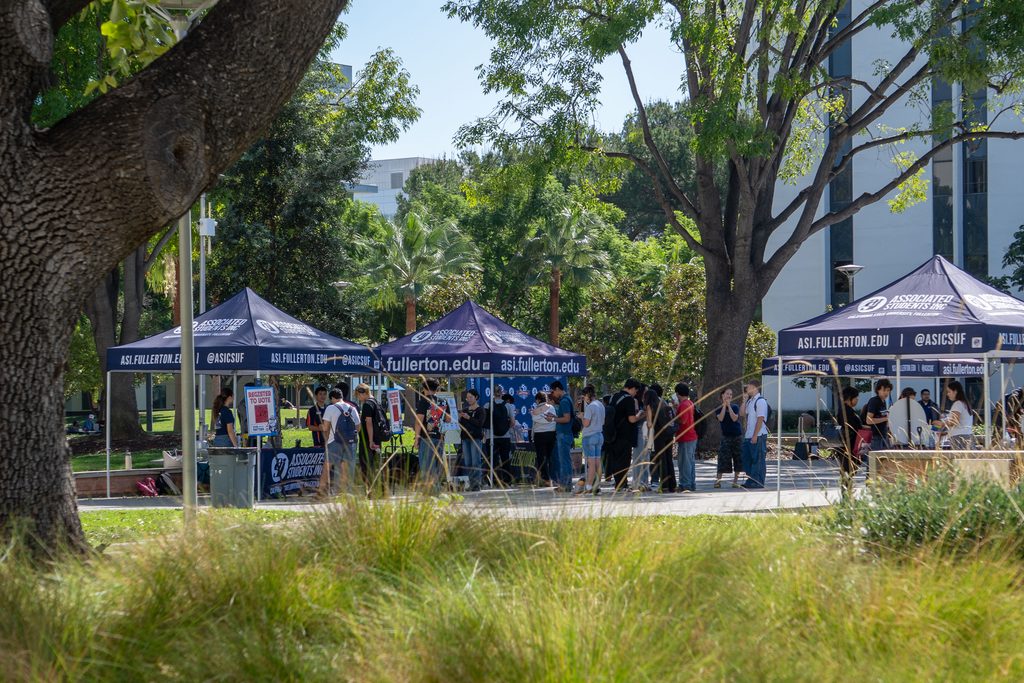
“Staying civically engaged as a college student is essential, especially in this midterm election,” said Sydney Hernandez, chief governmental officer at Cal State Fullerton Associated Students Inc. “All of these propositions, different local legislators; they affect us directly in our cities and in our schools. So, staying informed is essential.”
To increase voter turnout rates among students on campus, CSUF and ASI have implemented various voter participation efforts like the California University and College Ballot Bowl and “Titans Turnout.”
Titans Turnout: Encouraging Student Voter Participation at CSUF
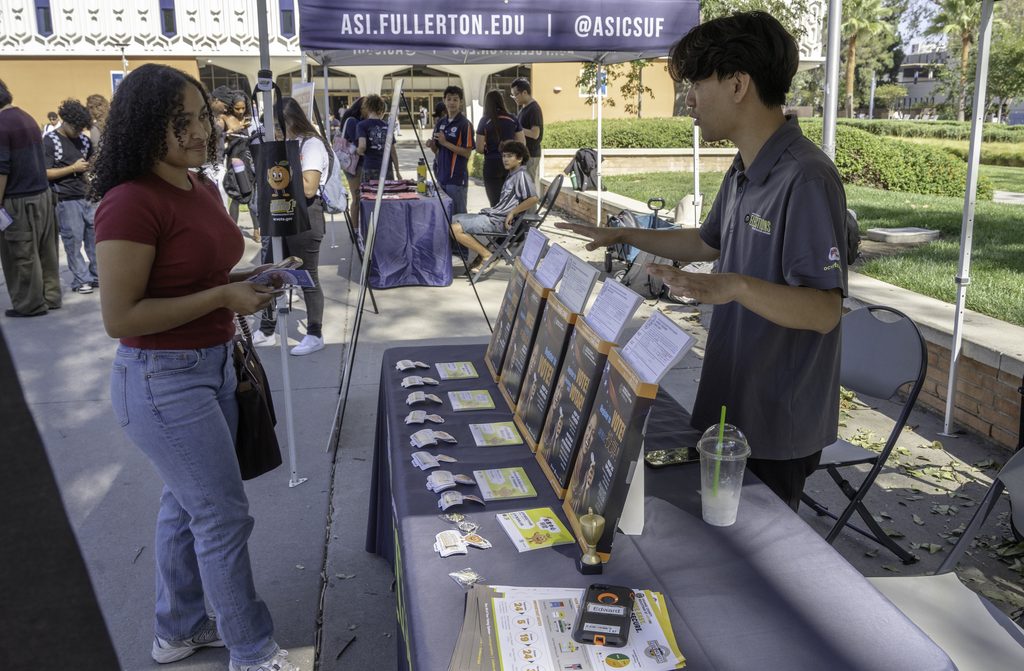
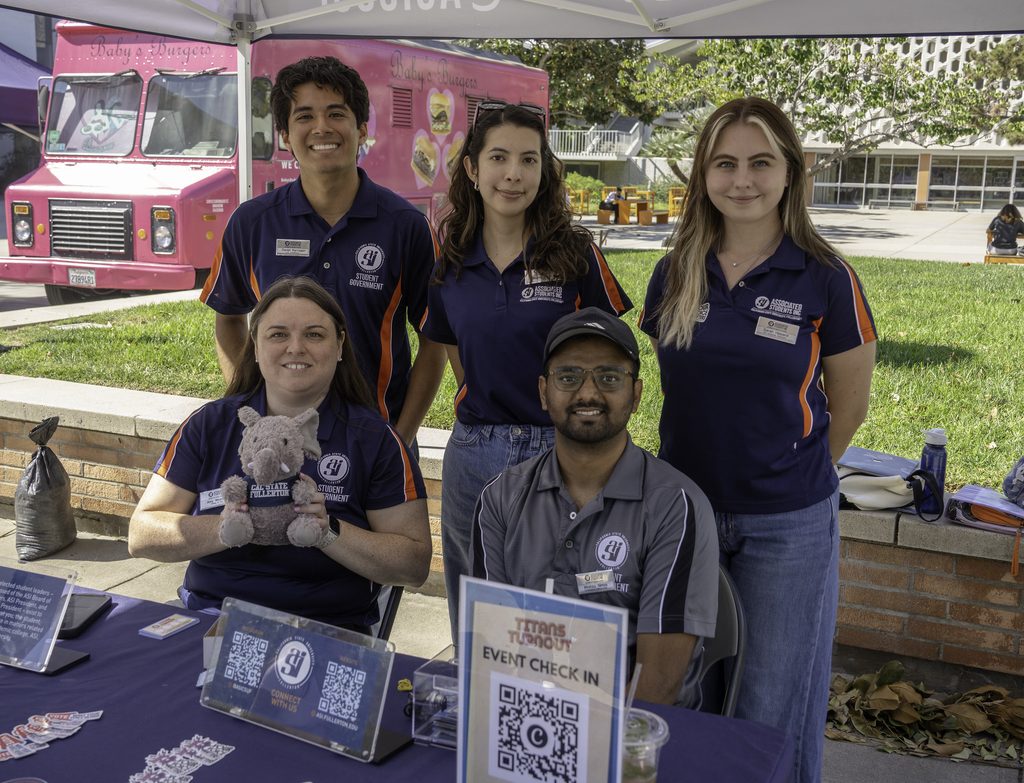
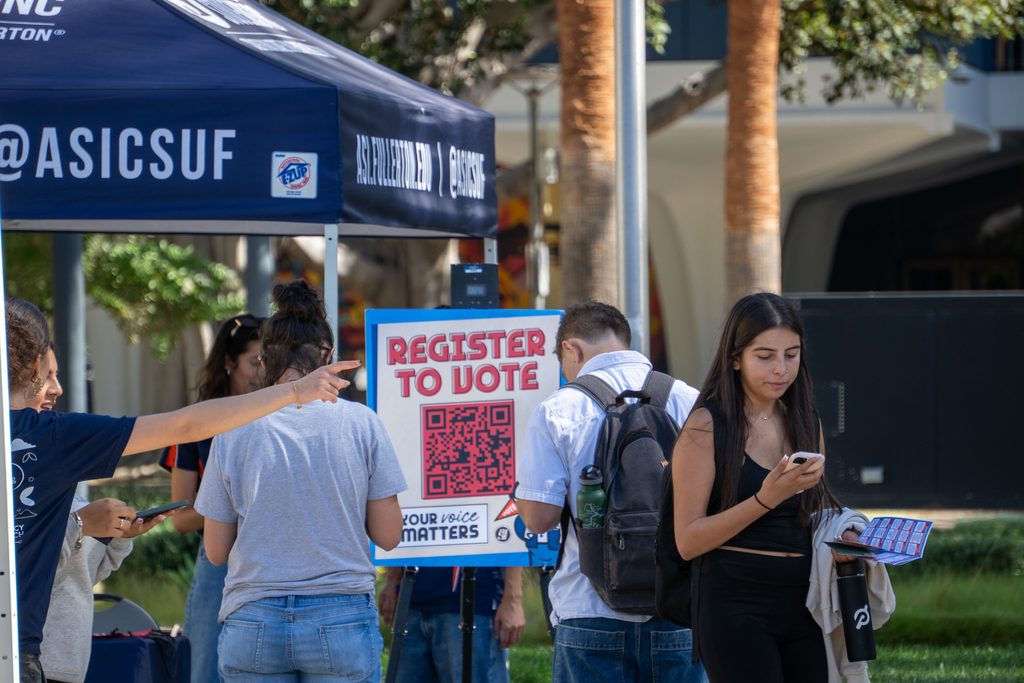
Hosted by the ASI Student Government Lobby Corps Commission in October, “Titans Turnout” encouraged students to register to vote in the midterm elections by providing education and resources. The Lobby Corps Commission is responsible for advocating on behalf of students on all levels of governance affecting higher education.
“This event is very important to host on campus because this is where our students are,” said Hernandez. “We brought together eight different groups today here in the Central Quad, all of them serving different resources, giving different information. This is where our students are, so bringing this to them on campus is very, very important.”
Hernandez, who has previous experience working in Washington, D.C. as a federal relations student assistant, works to bring government advocacy and education to students at CSUF.

The event brought together the CSUF Political Science Student Association, the Orange County Registrar of Voters and ASI’s Student Government to assist students in registering to vote, answer ballot questions and encourage civic discussion on campus.
“We want to make sure people are aware of the issues that are going on,” said Lobby Corps Commissioner Daniel Barragan. “We have a lot of ballot propositions, and those can be kind of confusing. We’re just here to provide a resource for students to know how to vote, and where to vote.”
The California University and College Ballot Bowl

For several years, CSUF has participated in The California University and College Ballot Bowl, a competition that encourages increased voter participation and engagement efforts in colleges and universities.
Hosted by the California Secretary of State’s Students Vote Project (SVP), the initiative allows colleges and universities to earn points by registering students to vote and encouraging them to submit a College Student Voter Plan.
Campuses can also earn points by completing a Civic and Voter Empowerment Action Plan outlining their proposed civic engagement initiatives over the next two academic years.
In 2020, CSUF was named the Ballot Bowl champion with 2,716 total student voter registrations. CSUF also had a high turnout for the 2024 Ballot Bowl, ranking first among California State Universities and second for Best Civic and Voter Empowerment Action Plans.
“It is super important to advocate for voting because if you don’t vote, there’s no change made,” said Jennifel Rodriguez, a third-year political science student. “In order for change to be made, it is important to get your voice out there.”
The 2026 Ballot Bowl runs from Aug. 10 through Nov. 3 with points updated every week.
California Midterm Election Voter Guide
There are several items on California ballot affecting college students through education, voting rights and representation in state government.
“It’s very easy to just look at different things coming out on social media and just kind of stop there. But to continue to do that research, to continue to check the news is essential,” said Hernandez.
Proposition 3
Proposition 3 would assign a permanent income tax on individuals making $360K or more a year to fund education and health care. This tax was first enacted in 2012 and is set to expire in 2031.
Nearly 90% of the tax would fund K-12 public schools, 11% would fund community colleges and any excess funds would go to public health care.
The California Teachers Association and the California Democratic Party say the tax is crucial for public school funding, helping avoid budget cuts and program reductions.
The California Taxpayers Association and Reform California, say that making the tax permanent would result in wealthy Californians moving to states with lower income taxes — decreasing tax revenue that fund public services.
Proposition 39
Proposition 39 would require voters to present government-issued identification at the voting polls and mail-in voters to provide Social Security information to verify U.S. citizenship.
While California currently requires voters to provide an identification card and Social Security number to register to vote, it does not require individuals to present them at polling locations.
The California Republican Party and Reform California, say that the measure would strengthen Californians’ trust in the election process and system.
The American Civil Liberties Union and the California Democratic Party, say that the measure would create voting barriers for disabled individuals, low-income communities and those who have recently moved addresses.
Proposition 40
Proposition 40 would require Californians whose net worth exceeds $1 billion to pay a one-time 5% tax. The tax is projected to raise around $100 billion over five years and would fund health care, food assistance and education.
The Service Employees International Union-United Healthcare Workers West and the California Democratic Party, say that wealthy Californians should contribute more to public services following federal reductions to health care.
The California Business Roundtable, California Medical Association and the California Teachers Association, say that the measure will cause wealthy Californians to leave the state, only providing a temporary funding for healthcare and threatening long term funding for education and public services.

Governor
The California governor is responsible for overseeing most state departments and agencies, appointing judges, proposing new laws, approving or vetoing legislation and overseeing state resources for emergencies.
The Democratic nominee is Xavier Becerra.
The Republican nominee is Steve Hilton.
Board of Equalization District 4
The California Board of Equalization is a five-person board consisting of the state controller and four elected members representing specific geographic districts. The board advises county assessors, sets the taxable value of property owned by utilities and railroads and handles taxpayer appeals.
District 4 represents the Orange, Imperial, Riverside, San Bernardino and San Diego counties.
The Democratic nominee is Tom Umberg.
The Republican nominee is Denis Bilodeau.
Superintendent of Public Institution
The Superintendent of Public Institution is a nonpartisan office that serves as a voice for public interest in the governance of the state’s educational systems.
The two nominees are Richard Barrera and Sonja Shaw.
Get Out and Vote! Find Your Nearest Voting Booth
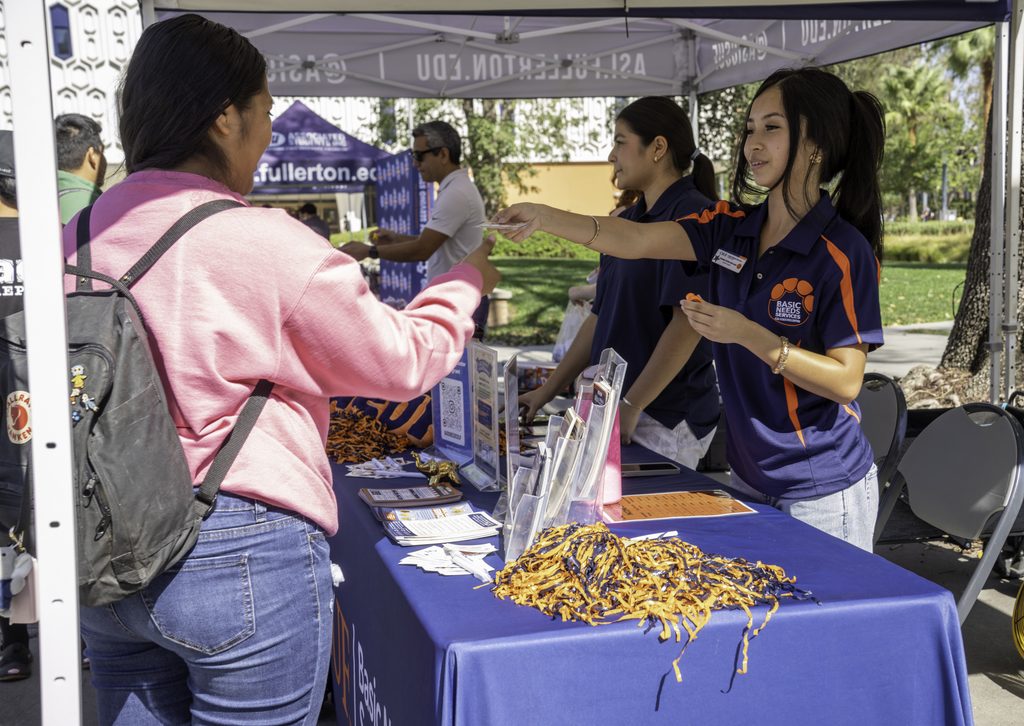
With Election Day approaching on Nov. 3, Cal State Fullerton is making it easier for students and the campus community to cast their ballots.
An in-person voting center will be available at Portola Pavilion C in the Titan Student Union from Oct. 31 through Nov. 3. Voters can visit the center from 10 a.m. to 6 p.m. Oct. 31-Nov. 2, with extended hours from 7 a.m. to 8 p.m. on Election Day.
For those voting by mail, a 24-hour ballot drop box is available in CSUF Parking Lot S10 through 8 p.m. Nov. 3.
Voters can check their registration status and track their ballots through the California Secretary of State website. Eligible voters who missed the Oct. 19 registration deadline can also learn about same-day registration through the state’s Conditional Voter Registration program.
“It’s important for college students to be civically engaged and vote because it shows that they care about the community and the environment,” said Joseph Deloya, a second-year accounting student. “Students need to be politically active to help those who can’t vote and improve the conditions of living for others.”